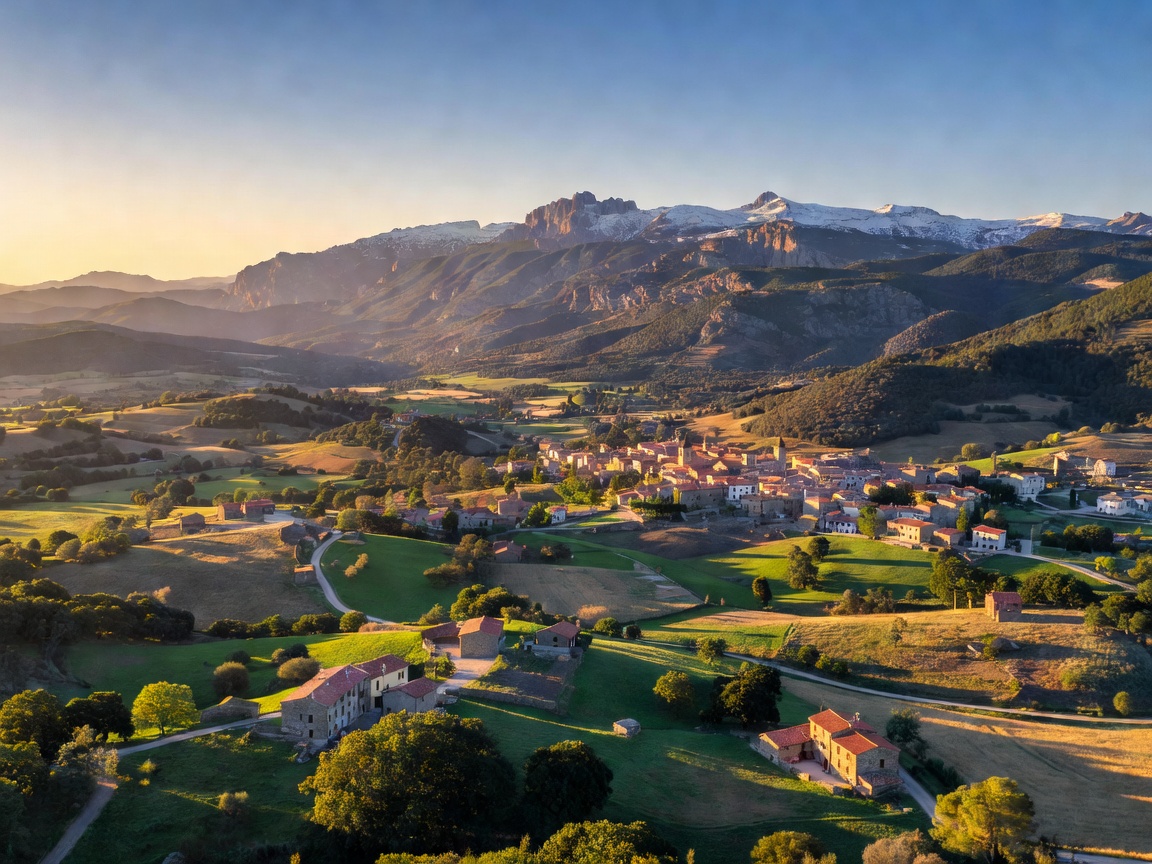
Cartographic Position in Cerdanya
Llívia is a Spanish town and municipality located in the historic comarca of Baixa Cerdanya, administratively belonging to the province of Girona in the autonomous community of Catalonia, Spain. It covers an area of 12.83 square kilometers (4.95 sq mi) and is separated from the main border of Spain by a 1.7-kilometer-wide corridor of French territory belonging to the commune of Bourg-Madame.
The Semantic Loophole in the Treaty of the Pyrenees (1659)
Llívia exists due to a celebrated 17th-century diplomatic technicality. Under the Treaty of the Pyrenees (1659), which ended the Franco-Spanish War (1635–1659), the Kingdom of Spain agreed to cede to the Kingdom of France all villages (French: villages; Spanish: pueblos) in the northern Cerdanya valley.
However, during the subsequent Treaty of Llívia negotiations in 1660, the Spanish diplomats noted that Emperor Charles V had formally bestowed upon Llívia the prestigious royal charter title of "Town" (Villa / Ciudad) in 1528 in recognition of its ancient Roman origins (Julia Libica). Since the treaty text specified only the cession of villages, Spain successfully argued that the town of Llívia was exempt from French annexation. France conceded the point, and Llívia remained a Spanish island on French soil.
The Neutral Corridor: Route Neutre
To connect the enclave to the mainland Spanish border town of Puigcerdà, the 1866 Treaty of Bayonne established the Route Neutre (French Route Nationale N20 / Spanish N-154). By international convention, Spanish citizens could travel freely along this 4-kilometer paved corridor without customs clearance or passport controls, provided they did not stop on French territory.
In the 1970s and 1980s, the French government built stop signs and roundabouts along intersecting French roads (D30), leading to the famous "War of the Stop Signs," where Spanish drivers repeatedly removed French traffic signs claiming they violated neutral transit rights. With the creation of the Schengen Agreement and European single market, full freedom of movement was established, turning the Route Neutre into an open highway with a bridge over the Segre River.
Cultural Heritage: The Historic Esteve Pharmacy
Llívia is also home to the historic Esteve Pharmacy (Farmàcia Esteve), documented since 1594 and widely recognized as one of the oldest surviving apothecaries in Europe. It houses Renaissance ceramic medicine jars, Cordovan leather boxes, and medicinal herb cabinets preserved through centuries of geopolitical isolation.