Cartographic Position and Topography
The Most Serene Republic of San Marino (Serenissima Repubblica di San Marino) is completely enveloped by Italy, nestled between the Italian regions of Emilia-Romagna (Province of Rimini) and Marche (Province of Pesaro and Urbino). Covering an area of just 61.2 square kilometers (23.6 sq mi), San Marino is the third smallest independent state in Europe after Vatican City and Monaco, and the fifth smallest globally.
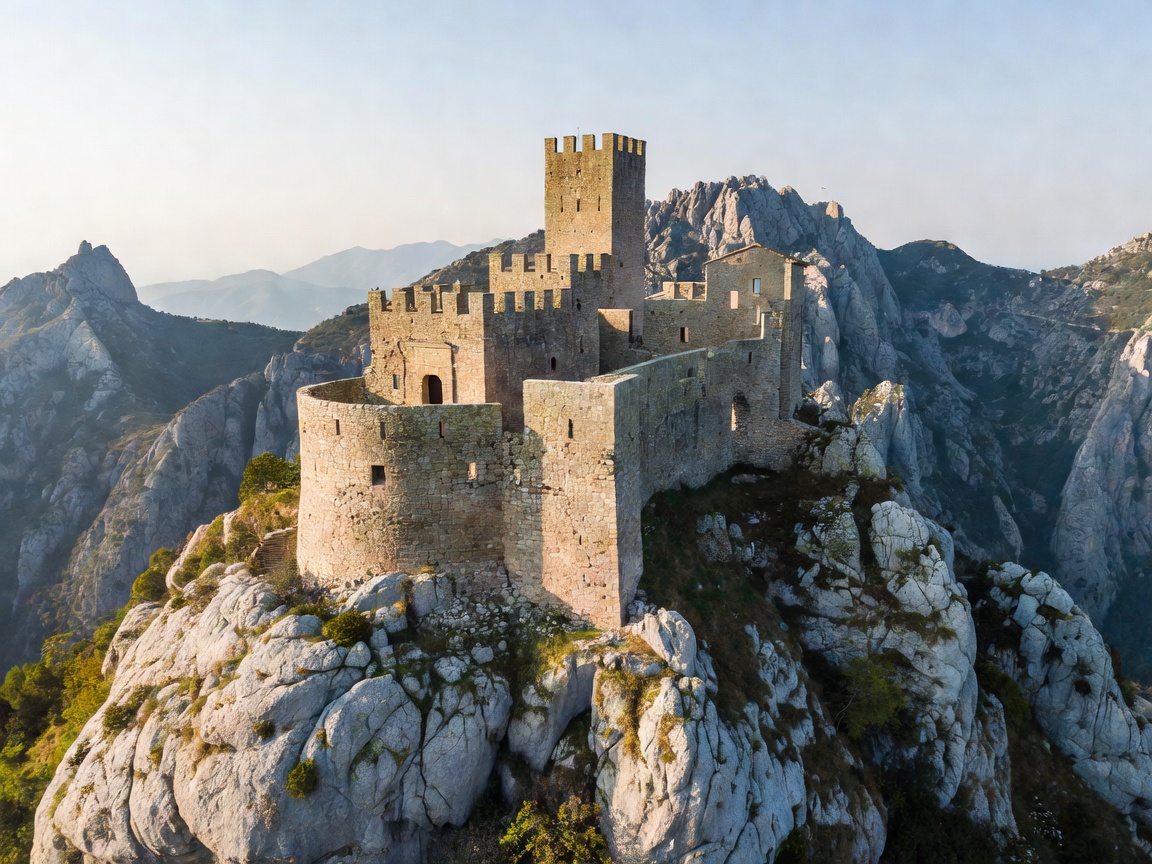
The state is dominated by the limestone ridge of Mount Titano (Monte Titano), which rises sharply to 739 meters (2,425 ft) above sea level, providing a natural panoramic vantage point over the Adriatic coastal plain just 10 kilometers away.
Ancient Foundation and Republican Continuity
According to unbroken historical tradition, San Marino was founded on 3 September 301 AD by Saint Marinus, a Christian stonemason fleeing the Diocletianic Persecution from the island of Rab in Dalmatia (modern Croatia). Marinus established a small monastic refuge on Mount Titano under the dying words: "Relinquo vos liberos ab utroque homine" ("I leave you free from both men"—referring to both the Roman Emperor and the Pope).
This community evolved into a self-governing commune. San Marino's constitutional framework is anchored in the Statutes of 1600 (written in Latin in six books), which remain the oldest governing constitutional documents still in active force globally. The executive power is uniquely exercised by two Captains Regent (Capitani Reggenti), elected every six months by the Grand and General Council to prevent the concentration of autocratic power.
How San Marino Survived Italian Unification
During the 19th-century Risorgimento (unification of Italy), virtually all independent duchies, republics, and the Papal States were absorbed into the emerging Kingdom of Italy. San Marino survived this process intact due to its humanitarian assistance to Giuseppe Garibaldi.
In 1849, Garibaldi and his fleeing troops found sanctuary within the neutral walls of San Marino when encircled by Austrian and Papal forces. In gratitude, Garibaldi championed the preservation of San Marino's sovereign independence. On March 22, 1862, San Marino and the newly formed Kingdom of Italy signed the Convention of Friendship and Good Neighbourliness, an international treaty formally recognizing Sammarinese sovereignty, postal autonomy, and establishing an open customs border.
Economic Integration and European Relations
Although San Marino is not a formal member of the European Union or the Eurozone, it uses the Euro (€) as its official currency through a monetary agreement with the EU and mints its own highly prized national euro coins. It is an active member of the United Nations (admitted 1992), the Council of Europe, and the International Court of Justice.